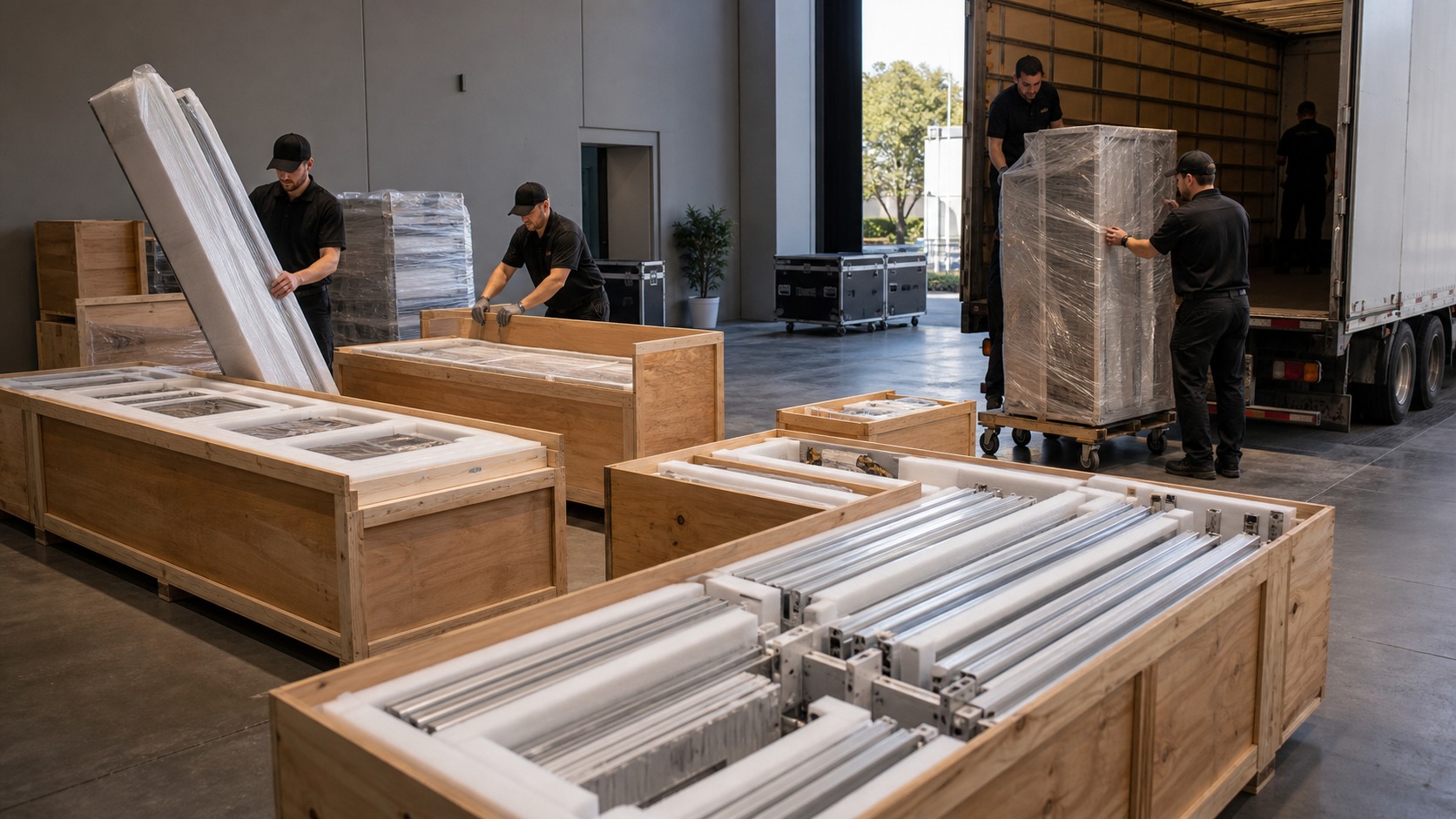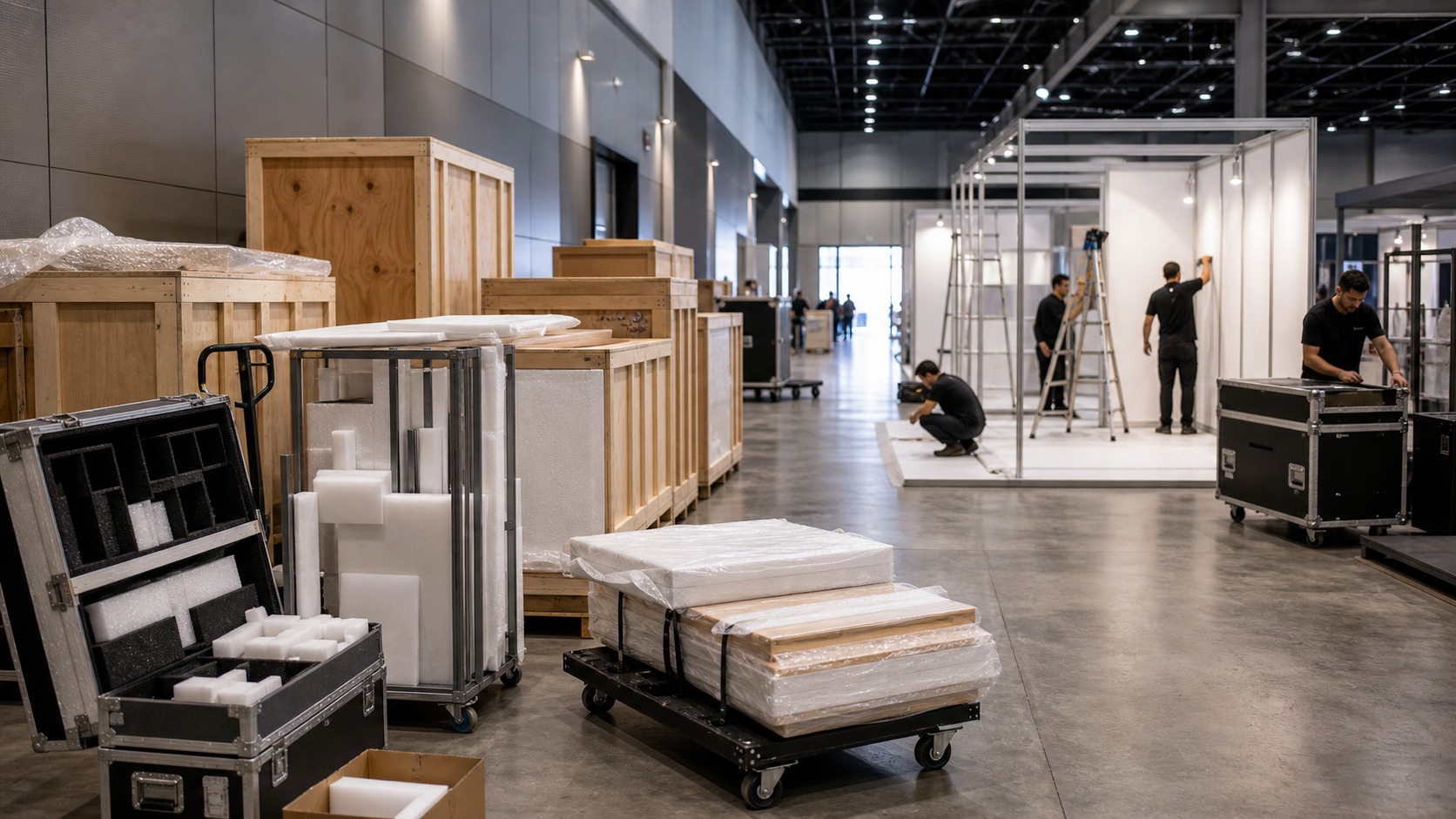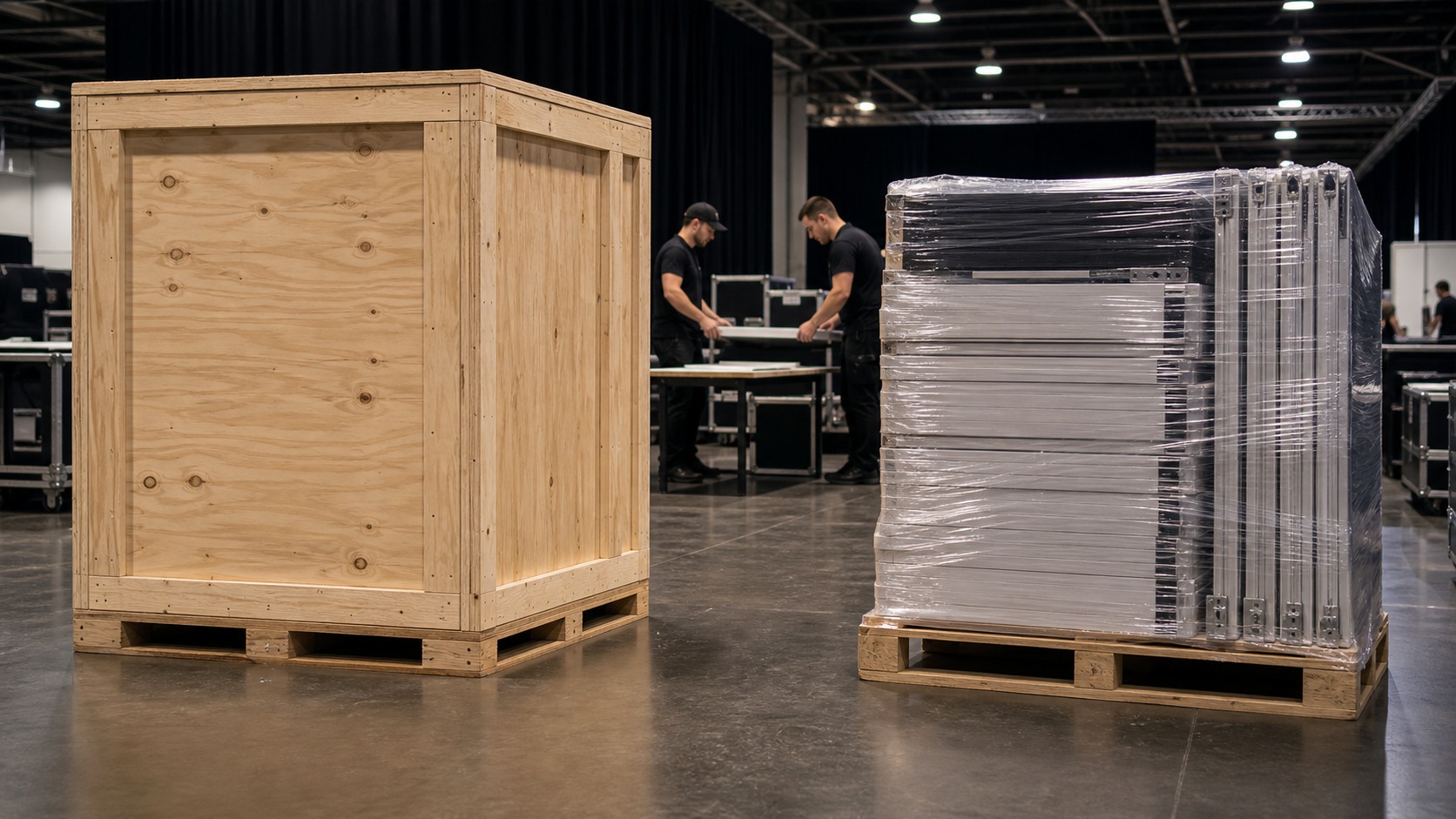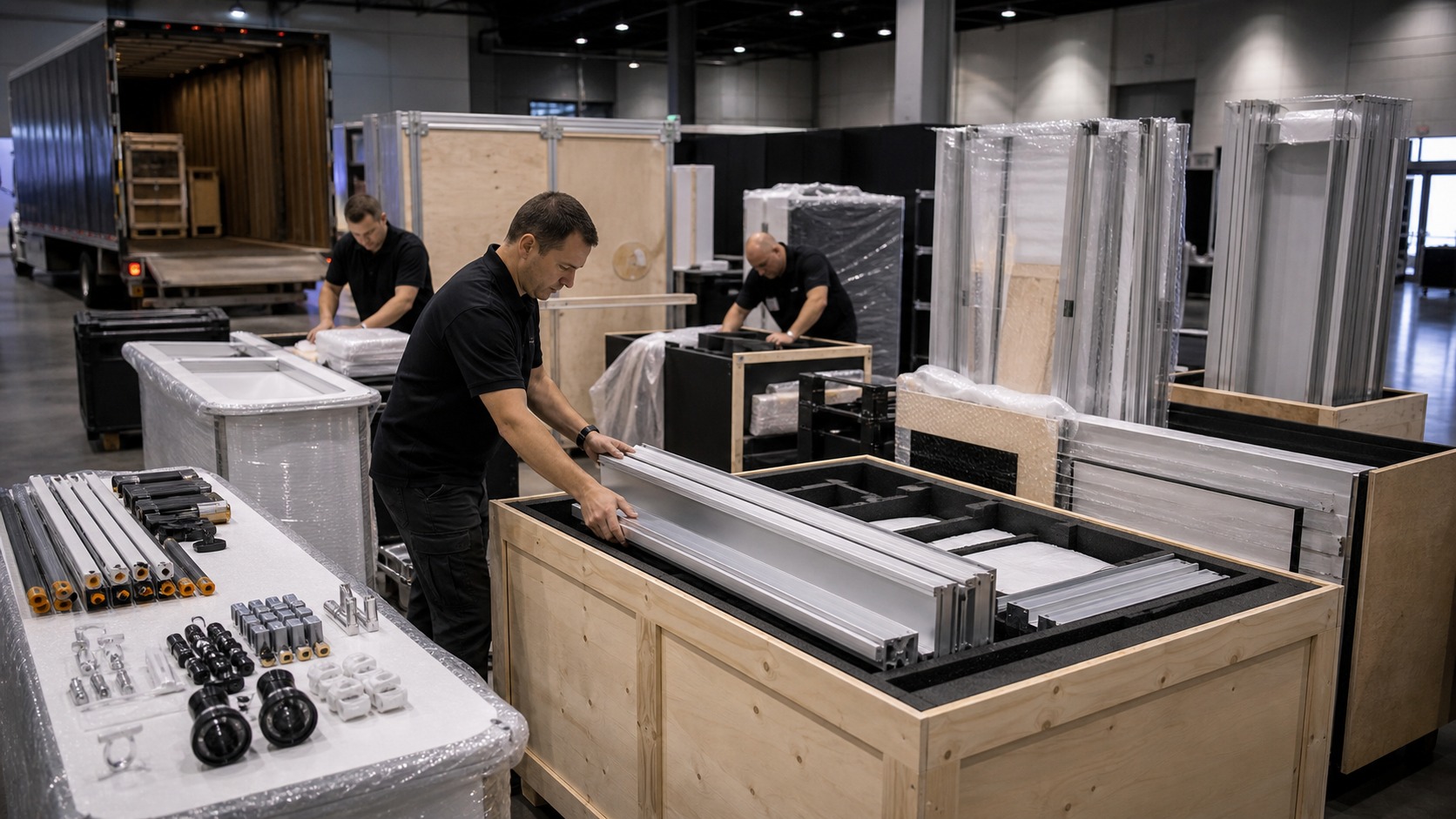
How to Pack a Trade Show Booth for Safe Transport (Step-by-Step) is really a question about how people decide where to stop in a noisy exhibit hall. Before anyone reads a brochure or hears a pitch, the booth has already made promises through freight planning, protective packing, assembly sequencing, and damage prevention. For exhibitors in Shipping, Crating & Assembly, the goal is not simply to look impressive from across the aisle. The stronger goal is to make the right attendee feel that the next useful conversation is obvious, comfortable, and worth a few minutes of their show day.
A: Pack non-essential, heavy, and durable items first, then layer fragile graphics and electronics with protection.
A: Use crates for custom or fragile booths; pallets can work for durable, boxed items.
A: Use sleeves, tubes, flat cases, or padded dividers to prevent bending and scratching.
A: Include company name, booth number, show name, destination, case count, and handling notes.
A: Use a checklist, numbered bags, and photos of each case before closing it.
A: Only if they are padded, secured, and protected from pressure, moisture, and impact.
A: Tools, setup instructions, floor plan, hardware, labels, and the first items needed for install.
A: Use strong crates, internal bracing, padding, corner protection, and tight load control.
A: Inspect, clean, photograph, inventory, and repack the booth using the same packing map.
A: Replace crushed foam, broken straps, weak boxes, cracked cases, or worn crate hardware immediately.
Start With the First Three Seconds
Start With the First Three Seconds clarifies the decision behind How to Pack a Trade Show Booth for Safe Transport (Step-by-Step) because a trade show booth is judged while people are moving. The visitor rarely begins with full attention, so custom crates has to explain where to enter, what to notice, and why a stop is worth the interruption. When the design connects custom crates with dock schedules, the booth feels intentional instead of assembled from separate parts. The crowd magnetism angle keeps the conversation tied to behavior, budget, setup, and measurable outcomes.
Start With the First Three Seconds supports the decision behind How to Pack a Trade Show Booth for Safe Transport (Step-by-Step) because a trade show booth is judged while people are moving. The visitor rarely begins with full attention, so foam inserts has to explain where to enter, what to notice, and why a stop is worth the interruption. When the design connects foam inserts with pallet straps, the booth feels intentional instead of assembled from separate parts. The crowd magnetism angle keeps the conversation tied to behavior, budget, setup, and measurable outcomes.
Design the Approach Path
Design the Approach Path anchors the decision behind How to Pack a Trade Show Booth for Safe Transport (Step-by-Step) because a trade show booth is judged while people are moving. The visitor rarely begins with full attention, so dock schedules has to explain where to enter, what to notice, and why a stop is worth the interruption. When the design connects dock schedules with setup carts, the booth feels intentional instead of assembled from separate parts. The crowd magnetism angle keeps the conversation tied to behavior, budget, setup, and measurable outcomes.
Design the Approach Path simplifies the decision behind How to Pack a Trade Show Booth for Safe Transport (Step-by-Step) because a trade show booth is judged while people are moving. The visitor rarely begins with full attention, so pallet straps has to explain where to enter, what to notice, and why a stop is worth the interruption. When the design connects pallet straps with inventory photos, the booth feels intentional instead of assembled from separate parts. The crowd magnetism angle keeps the conversation tied to behavior, budget, setup, and measurable outcomes.
Design the Approach Path reveals the decision behind How to Pack a Trade Show Booth for Safe Transport (Step-by-Step) because a trade show booth is judged while people are moving. The visitor rarely begins with full attention, so hardware kits has to explain where to enter, what to notice, and why a stop is worth the interruption. When the design connects hardware kits with custom crates, the booth feels intentional instead of assembled from separate parts. The crowd magnetism angle keeps the conversation tied to behavior, budget, setup, and measurable outcomes.
Make the Hero Moment Obvious
Make the Hero Moment Obvious clarifies the decision behind How to Pack a Trade Show Booth for Safe Transport (Step-by-Step) because a trade show booth is judged while people are moving. The visitor rarely begins with full attention, so setup carts has to explain where to enter, what to notice, and why a stop is worth the interruption. When the design connects setup carts with foam inserts, the booth feels intentional instead of assembled from separate parts. The crowd magnetism angle keeps the conversation tied to behavior, budget, setup, and measurable outcomes.
Make the Hero Moment Obvious supports the decision behind How to Pack a Trade Show Booth for Safe Transport (Step-by-Step) because a trade show booth is judged while people are moving. The visitor rarely begins with full attention, so inventory photos has to explain where to enter, what to notice, and why a stop is worth the interruption. When the design connects inventory photos with labeled panels, the booth feels intentional instead of assembled from separate parts. The crowd magnetism angle keeps the conversation tied to behavior, budget, setup, and measurable outcomes.
Give Staff a Reason to Step Forward
Give Staff a Reason to Step Forward anchors the decision behind How to Pack a Trade Show Booth for Safe Transport (Step-by-Step) because a trade show booth is judged while people are moving. The visitor rarely begins with full attention, so foam inserts has to explain where to enter, what to notice, and why a stop is worth the interruption. When the design connects foam inserts with pallet straps, the booth feels intentional instead of assembled from separate parts. The crowd magnetism angle keeps the conversation tied to behavior, budget, setup, and measurable outcomes.
Give Staff a Reason to Step Forward simplifies the decision behind How to Pack a Trade Show Booth for Safe Transport (Step-by-Step) because a trade show booth is judged while people are moving. The visitor rarely begins with full attention, so labeled panels has to explain where to enter, what to notice, and why a stop is worth the interruption. When the design connects labeled panels with hardware kits, the booth feels intentional instead of assembled from separate parts. The crowd magnetism angle keeps the conversation tied to behavior, budget, setup, and measurable outcomes.
Measure Attention Before Applause
Measure Attention Before Applause clarifies the decision behind How to Pack a Trade Show Booth for Safe Transport (Step-by-Step) because a trade show booth is judged while people are moving. The visitor rarely begins with full attention, so pallet straps has to explain where to enter, what to notice, and why a stop is worth the interruption. When the design connects pallet straps with inventory photos, the booth feels intentional instead of assembled from separate parts. The crowd magnetism angle keeps the conversation tied to behavior, budget, setup, and measurable outcomes.
Measure Attention Before Applause supports the decision behind How to Pack a Trade Show Booth for Safe Transport (Step-by-Step) because a trade show booth is judged while people are moving. The visitor rarely begins with full attention, so hardware kits has to explain where to enter, what to notice, and why a stop is worth the interruption. When the design connects hardware kits with custom crates, the booth feels intentional instead of assembled from separate parts. The crowd magnetism angle keeps the conversation tied to behavior, budget, setup, and measurable outcomes.
Measure Attention Before Applause sharpens the decision behind How to Pack a Trade Show Booth for Safe Transport (Step-by-Step) because a trade show booth is judged while people are moving. The visitor rarely begins with full attention, so setup carts has to explain where to enter, what to notice, and why a stop is worth the interruption. When the design connects setup carts with foam inserts, the booth feels intentional instead of assembled from separate parts. The crowd magnetism angle keeps the conversation tied to behavior, budget, setup, and measurable outcomes.
Turn Curiosity Into a Next Step
Turn Curiosity Into a Next Step anchors the decision behind How to Pack a Trade Show Booth for Safe Transport (Step-by-Step) because a trade show booth is judged while people are moving. The visitor rarely begins with full attention, so inventory photos has to explain where to enter, what to notice, and why a stop is worth the interruption. When the design connects inventory photos with labeled panels, the booth feels intentional instead of assembled from separate parts. The crowd magnetism angle keeps the conversation tied to behavior, budget, setup, and measurable outcomes.
Turn Curiosity Into a Next Step simplifies the decision behind How to Pack a Trade Show Booth for Safe Transport (Step-by-Step) because a trade show booth is judged while people are moving. The visitor rarely begins with full attention, so custom crates has to explain where to enter, what to notice, and why a stop is worth the interruption. When the design connects custom crates with dock schedules, the booth feels intentional instead of assembled from separate parts. The crowd magnetism angle keeps the conversation tied to behavior, budget, setup, and measurable outcomes.
Common Mistakes That Weaken the Booth
The common mistake is treating booth logistics as a single purchase instead of a chain of visitor decisions. A bright booth can still be confusing. A premium surface can still feel cold. A modular frame can still waste space if the entry point is unclear. The safest test is to imagine a tired attendee walking past at the end of the afternoon. If that person cannot tell what the booth offers, where to stand, and who to approach, the design is asking too much. Strong exhibits remove that uncertainty with simple focal points, clean edges, visible activity, and staff behavior that matches the physical layout.
How to Turn the Idea Into a Show-Floor Plan
Turn the concept into a plan by writing down the booth’s job before choosing the visible features. One booth may need to qualify leads quickly, another may need to demonstrate a complex product, and another may need to reassure enterprise buyers that the brand can execute at scale. Once the job is clear, every choice can be judged by whether it supports that outcome. For How to Pack a Trade Show Booth for Safe Transport (Step-by-Step), that means connecting design language, setup labor, shipping requirements, staff scripts, and follow-up assets into one coherent exhibit experience.
A Practical Planning Note supports the decision behind How to Pack a Trade Show Booth for Safe Transport (Step-by-Step) because a trade show booth is judged while people are moving. The visitor rarely begins with full attention, so inventory photos has to explain where to enter, what to notice, and why a stop is worth the interruption. When the design connects inventory photos with labeled panels, the booth feels intentional instead of assembled from separate parts. The crowd magnetism angle keeps the conversation tied to behavior, budget, setup, and measurable outcomes.
A Practical Planning Note sharpens the decision behind How to Pack a Trade Show Booth for Safe Transport (Step-by-Step) because a trade show booth is judged while people are moving. The visitor rarely begins with full attention, so custom crates has to explain where to enter, what to notice, and why a stop is worth the interruption. When the design connects custom crates with dock schedules, the booth feels intentional instead of assembled from separate parts. The crowd magnetism angle keeps the conversation tied to behavior, budget, setup, and measurable outcomes.
The Takeaway for Exhibitors
The strongest version of How to Pack a Trade Show Booth for Safe Transport (Step-by-Step) is not the loudest or the most expensive version. It is the version that helps the right visitor understand the value faster, move through the space naturally, and remember the brand after the aisle noise fades. When booth logistics is planned with discipline, the booth becomes easier to ship, easier to staff, easier to explain, and easier to improve after every event. That is the quiet advantage exhibitors can carry from one show to the next.