Safety Rules Protect Visitors, Staff, and the Booth Schedule
Trade Show Safety Rules Every Exhibitor Needs to Know matters because exhibitors rarely have unlimited time, budget, or staff attention. The best approach is to turn the subject into a planning system that helps the team make clear decisions before the show, respond well during the event, and review results afterward. For exhibitor safety rules, the goal is not to chase every possible tactic. It is to choose the practices that support the business reason for exhibiting and make the booth easier to measure, manage, and improve.
Start With the Main Decision
Start With the Main Decision matters because trade Show Safety Rules Every Exhibitor Needs to Know should support a clear exhibitor decision, not just fill a planning document. For exhibitors responsible for safe booth operations, the useful starting point is to name the outcome, the owner, and the evidence needed to judge progress. When the safety and compliance checklist begins with those basics, the team can separate urgent work from optional improvements and avoid debating priorities after deadlines are already close.
A practical baseline for trade Show Safety Rules Every Exhibitor Needs to Know should include the show date, the booth goal, the budget owner, the vendor or internal teams involved, and the point where the decision affects the floor experience. That baseline makes this topic easier to manage because it gives every later choice a reference point. If a task does not reduce creating hazards, failing inspection, or delaying booth approval, improve the visitor experience, or make the final review more useful, it may not deserve attention in the active show plan.
Build the Plan Around Real Constraints
For trade Show Safety Rules Every Exhibitor Needs to Know, build the plan around real constraints should happen before the team commits to final orders, final staffing, or final messaging. The most common problems appear when people assume another department has already handled a detail. Sales may assume marketing has captured the right context, marketing may assume operations has confirmed the deadline, and operations may assume the vendor has the newest booth plan. Those assumptions are where preventable costs and delays often begin for this specific exhibit decision.
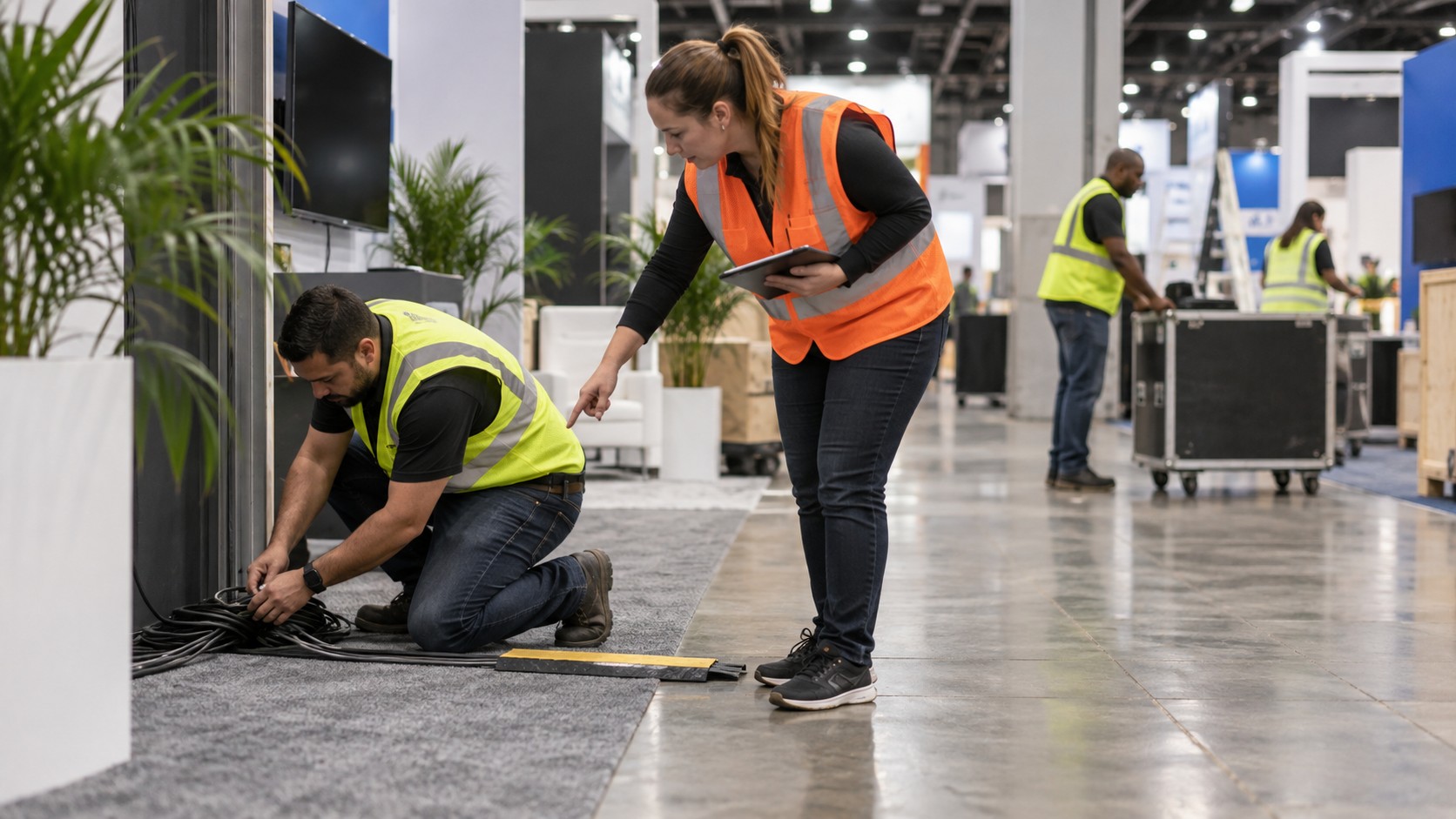
Use a short decision record for this part of trade Show Safety Rules Every Exhibitor Needs to Know. It does not need to be elaborate. It should say what was decided, who approved it, what evidence supports it, and what must happen next. For this topic, the most useful evidence usually includes show manual requirements, aisle checks, cable protection, fire-safety notes, staff briefings, and correction records. That kind of record gives the team something concrete to check when the show floor gets busy.
Coordinate the People Involved
Coordinate the People Involved is where trade Show Safety Rules Every Exhibitor Needs to Know becomes operational. A trade show team needs to know who acts first, who waits for confirmation, and who has authority to solve a problem onsite. Without that order, the booth can look busy while the important work stalls. The best plans make the next action obvious enough that a staff member, vendor, or manager can keep this topic moving even when the primary owner is not standing nearby.
This is also the right place to check dependencies for trade Show Safety Rules Every Exhibitor Needs to Know. If the answer depends on a contractor, venue service desk, carrier, insurance provider, show manual, or sales owner, the dependency should be visible. Hidden dependencies are especially risky because they often surface when there is no time left for a clean fix. For exhibitors responsible for safe booth operations, the goal is to reduce ambiguity before setup inspection, opening readiness, and daily booth management begins.
Control Risk Before the Show Opens
Control Risk Before the Show Opens requires looking at trade Show Safety Rules Every Exhibitor Needs to Know for cost and risk before those issues become invoices or emergency decisions. Some costs are obvious because they appear on quotes. Others come from rework, rush orders, idle labor, missed deadlines, poor notes, or decisions made without the right person in the room. A stronger process asks which cost is preventable and which risk is worth accepting because it supports a more important booth outcome for this article's scenario.
The team should also decide what will trigger escalation. A missed confirmation, unclear scope, late approval, or conflicting instruction should not sit in an inbox until move-in. Escalation does not need to feel dramatic. It can simply mean that the right owner receives the issue early enough to make a decision. That habit is often what keeps trade Show Safety Rules Every Exhibitor Needs to Know from becoming a last-minute scramble.
Measure What Changed
Measure What Changed should connect trade Show Safety Rules Every Exhibitor Needs to Know to what happens at the booth. Staff need enough context to understand why the plan matters, not just what task they are supposed to complete. If the topic affects visitors, the team should know how to explain it in plain language. If it affects operations, they should know who to call, what to document, and which decisions around this topic they should not improvise.
A simple onsite check can prevent a weak handoff for trade Show Safety Rules Every Exhibitor Needs to Know. Walk the booth, compare the plan with the physical space, confirm that important services or materials are where they need to be, and capture anything that changed. Photos, short notes, and named owners are usually enough. The point is to make the final version of this plan visible to the people who must work from it.
Use the Review to Improve the Next Event
Use the Review to Improve the Next Event is the step that turns trade Show Safety Rules Every Exhibitor Needs to Know into a better exhibit program. The review should not repeat every detail from the event. It should focus on what changed, what surprised the team, what created friction, and what should be handled differently next time. For this article, the most useful review question is which risks were prevented early and which controls need to be clearer next time.
Keep the review specific enough to influence the next budget, timeline, vendor conversation, staff briefing, or sales handoff. That means naming the decision that should change, not only describing the problem. When the team treats trade Show Safety Rules Every Exhibitor Needs to Know as part of a repeatable operating system, each show leaves behind better evidence for the next one.
Practical Planning Notes
For trade Show Safety Rules Every Exhibitor Needs to Know, the safest improvement is usually a small, documented decision made earlier in the timeline. That could mean confirming an owner, asking a vendor for a clearer scope, checking a rule before ordering, or turning a verbal assumption into a written note. These small steps reduce confusion without making the planning process heavy.
The team should also preserve what worked while handling trade Show Safety Rules Every Exhibitor Needs to Know. If a checklist, meeting, vendor question, photo record, or approval step made the show easier to manage, it should become part of the next event plan. Good trade show operations are built from those repeatable habits, especially when several departments contribute to this part of the booth experience.
Questions to Ask Before the Deadline
Before the deadline arrives, the team should ask what information is still uncertain and who can resolve it. The answer may point to a vendor, a show-services contact, a sales owner, a finance approver, or a booth manager. For trade Show Safety Rules Every Exhibitor Needs to Know, unanswered questions are rarely harmless because they tend to become more expensive once move-in begins.
A useful question list for trade Show Safety Rules Every Exhibitor Needs to Know should be short enough to use in a real meeting. It should focus on the decisions that affect cost, timing, visitor experience, or accountability. When the list becomes too long, group the questions by owner and deadline so the team can act instead of only discussing the risk.
Signals That the Plan Is Working
The plan is working when people can explain the next step without searching through old messages. It is also working when vendors know what has changed, staff understand the booth expectation, and leadership can see why a decision was made. Those signals are especially valuable for trade Show Safety Rules Every Exhibitor Needs to Know because they show that the process is creating clarity before pressure rises.
Another positive signal for trade Show Safety Rules Every Exhibitor Needs to Know is fewer surprises during final setup, opening day, and post-show closeout. A trade show will always involve some improvisation, but strong preparation keeps improvisation small. The team should notice where preparation saved time and make that habit part of the next event.
What to Record for Next Time
After the show, the team should record the handful of details that would be hard to reconstruct later. For trade Show Safety Rules Every Exhibitor Needs to Know, that may include the decision owner, the vendor contact, the cost that changed, the service that arrived late, the booth issue that affected staff, or the evidence that proved the plan worked. These notes should be specific, not polished.
The best record for trade Show Safety Rules Every Exhibitor Needs to Know is written for the next person who has to plan the same kind of show. It should help that person avoid a mistake, ask a better question, or make a faster decision. When the record has that practical purpose, post-show documentation becomes useful instead of ceremonial.
How to Keep the Process Manageable
Keeping trade Show Safety Rules Every Exhibitor Needs to Know manageable means avoiding unnecessary layers. One owner, one visible deadline list, one place for current documents, and one review after the show are usually more useful than a complicated system nobody updates. The goal is steady control, not administrative theater.
A manageable process for trade Show Safety Rules Every Exhibitor Needs to Know also respects the time of the people doing the work. Booth staff, vendors, sales teams, and operations managers all need clear instructions more than they need long explanations. The repair is often as simple as naming the decision, naming the owner, and confirming what happens next.
Additional Planning Check 6
Planning check 6 for trade Show Safety Rules Every Exhibitor Needs to Know is to compare the written plan with the physical booth, the event rules, and the people who must carry it out. If those three things do not match, the team should fix the mismatch before it becomes an onsite issue.
The outcome of planning check 6 for trade Show Safety Rules Every Exhibitor Needs to Know should be a decision, not a long discussion. A named owner, a clear deadline, and a short note about the change are enough to keep this part of the exhibit program moving with confidence.
Additional Planning Check 7
Planning check 7 for trade Show Safety Rules Every Exhibitor Needs to Know is to compare the written plan with the physical booth, the event rules, and the people who must carry it out. If those three things do not match, the team should fix the mismatch before it becomes an onsite issue.
The outcome of planning check 7 for trade Show Safety Rules Every Exhibitor Needs to Know should be a decision, not a long discussion. A named owner, a clear deadline, and a short note about the change are enough to keep this part of the exhibit program moving with confidence.